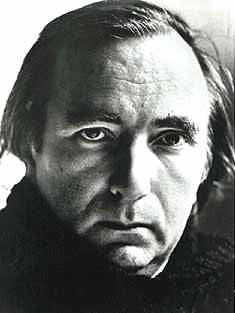
I noticed yesterday that it was the 79th anniversary of the death of Liang Qichaot, the famous late Qing Dynasty scholar, journalist, translator, reformer, exile, historian, and all around busybody. Liang Qichao has often been a popular focus for studying numerous facets of China’s encounter with the “modern”: newspapers, anthropology, historiography, education, sports, democracy, science. Liang was a complicated guy, and like any good scholar his views and ideas changed over time. But throughout his career he wrestled with two overlapping ideas, both of which were profoundly influential not only to his peers, but in Chinese society ever since: an evolutionary view of history, and the mortal threat to the existence of China as a race and nation.
By the late Qing, having lost wars, territory and pride to foreign nations, Chinese elites were utterly consumed with the fear of the extinction of China, as a culture, a people, a nation and a race. It did not help matters much that these four concepts were often seen as being one and the same, though there was an enormous amount of trouble defining quite what it was. It was easier, however, to talk about the things China was not: it was not strong; it was not modern (developed, we say now); it was not Manchu; it was not safe; it was not healthy. There were numerous voices for change, such as Zhang Zhidong, Kang Youwei and Zhang Binglin. Though they jockeyed amongst themselves for influence and power, and differed on ideas about how to go about it (respectively, “Chinese learning for fundamental principles, Western learning for practical application”; the Confucian utopia of”Great Unity” and “self-strengthening”; and “kill all the Manchus”), they agreed on the problem, and to varying degrees with each others solutions.
Into this environment came Darwin, or rather interpretations of Darwin were reinterpreted to explain what had happened and what must be done. In a translators game of telephone, Darwin as described by social Darwinist thinkers such as Spencer and Huxley were first translated into Japanese during their own Meiji reform, and then into Chinese, notably by Yan Fu. Translations of Darwin’s actual work would come later. Yan Fu was, along with Liang Qichao, a disciple of Kang Youwei. As Andrew Nathan summarized in his review of Pusey’s China and Charles Darwin,
Where Darwin said that evolution proceeds by competition among individuals within a species, Chinese social Darwinists read that the strugggle to survive occurs among nations or races as groups; where Darwin saw this competition as the effort of each organism to survive and reproduce in a given environment, Chinese social Darwinists saw conscious rivalry among enemies; where Darwin defined fitness as adaption to an environment, Chinese social Darwinists saw it as a quality of moral stature and will power; where Darwin regarded all species as being fit for the environments in which they happened to exist, Chinese social Darwinists saw a hierarchy, with men more fit than animals and the white and yellow races more fit than any others.
As anthropologist Wang Mingming has pointed out
In their translations, evolutions was termed “the Argument about the Heaven’s Change” (tianyan lun). In the footnotes that they made to the translated texts, many comments were made to interpret evolution into “the turn [or conjuncture] of fortune” (yunhui). Evolutionism was, to them, not simply a bio-medicine that was prescribed for the “East Asian Sick Men” (dongya bingfu), a self-name for the Chinese. It was, more importantly, an explanation of how Heaven that once shifted to Europe had by the late 19th century returned to its home in China. In the 20th century, Chinese-speaking anthropology has served as an instrument whereby the shift of Heaven from Europe to China has been made more or less a mytho-history.
Liang Qichao played quite a role in taking this interpretation and applying it to history. As he wrote in the first issue of his journal-in-exile, New Citizen (part of a continuing habit of labeling everything he did as “new”), he wrote:
What is history? History is nothing but the account of the development and strife of human races. There is no history without race .. .. I don ‘t know whether we can enjoy the great harmony of mankind across the boundaries of race in the future. Today, however, it is no exaggeration to say that the racial problem is the biggest problem in the world.. .. The essence of history is to follow the tracks of the rise and fall of every race over thousands of years. The spirit of history is to uncover the reasons for the rise and fall of every race over thousands of years.
Liang also promoted “survival of the fittest” from his perch at the newspaper Shiwubao (where he also constantly proclaimed everything was “new”, though scholar Natascha Vitinghoff has argued convincingly that practically every thing he claimed was “new”, from circulation to the importance of the fourth estate to journalistic ethics had in fact already been done in the 1870s by newspapers such as Shenbao). In the “newspaper wars” in the first decade of the 20th century, arguments over competition between papers was cast by some as a battle between the old and the new, with one being condemned to extinction, while others argued that in the “survival of the fittest”, the truth would emerge. The truth that, all agreed, would save the nation and the race.
One of the most virulent forms of this narrative of racial struggle was in anti-Manchu revolutionary thinking, and the revolutionaries were the ideological enemies of Kang and Liang, who were by and large royalists. Zhang Binglin, for example, called for revenge against the Manchus, the “public enemy of the Han race”, while Liang (and Kang) argued that
It has been said that the Manchus and we are completely different races, but that is not strictly true.. ,. Actually, the Manchus have been definitely assimilated into us in four out of the six elements which the debater [namely, Wang Jingwei] applied to classify races. In the remaining two elements, we cannot easily draw a conclusion that they and we are different. We therefore conclude that, judging from the sociological definition of race, that the Manchus have already assimilated into the Han and have sufficient qualifications to be members of our mixed nation.
Note here that Liang’s defense of Manchu’s is to say that they are Chinese, so they aren’t bad guys. Given that he saw history as a struggle for racial dominance, the only way to cast the Manchus as allies was to claim they had been sinicized. All the same, Liang still participated somewhat in the vilification of the Manchus, as he was one of many who helped circulate tales of the Yangzhou and Jiading massacres in the late 1890s. These accounts of survivors of Qing atrocities during the fall of the Ming Dynasty were re-cast with entirely Manchu soldiers (originally some were Chinese), and the victims implied to not simply be those unfortunates present, but later generations, the Han people, and China itself. These stories, and the idea that the Manchus were bloodthirsty wolves and the Han “slaves to an inferior race”, were later used by Sun Yatsen. In the Darwinist/Confucian hierarchy that Liang Qichao had helped promulgate in his writings, the Han were really at the bottom of the ladder. They weren’t just under the Manchus, they were under the Manchus who were under the Europeans. And for Sun Yatsen, in his own version of the Dolchstoßlegende, some Han were race traitors. Popular response to the massacre tales and this whipping up of racial hatred was “irrepressible gnashing of teeth and shouts of anger” (much like many on the Chinese Internet today gnash their teeth over the Japanese, or Chinese with foreign passports).
As a major popularizer of social Darwinist thought, Liang applied it to various subjects. According to Barry Sautman, he wrote that since Hungary was founded by the Huns, it was “established by the yellow race on the territory of the whites”. The ideas colored everything he wrote: when writing on education, he combined the idea of foetal education, a traditional belief that the mothers of great men, such as Mencius, had sat up straight and spoke no evil, thus contributing to the moral character of the foetus, with a micro-level view of Darwinism. If the child evolved right, then the nation would too. Women’s education was necessary, he argued, because without it they could only teach their children to be materialistic and shallow, and the nation would suffer. Rote memorization would block the development of the brain, and the nation would suffer. Competitive sports were necessary, for both men and women, as he wrote in On Martial Spirit, because without every “new citizen” engaging in physical competition, the nation would be weak… and yes, suffer.
Liang Qichao was not solely responsible for China’s fixation on “survival of the fittest” in the early 20th century, but he was tireless in disseminating it. He was very much a man of the times, seeing everything under the shadow of impending extinction. To be sure, the reformers championed many ideas that we today find progressive and laudable, such as ending footbinding, but the underlying reasons for it are profoundly disturbing. One can’t help but look to the coming Olympics, which overlaps the 110th anniversary of the Hundred Days Reform, and think of how many in China view it through the lense of the honor of the nation and the race, to prove to themselves that they are not inferior, and that they are strong. Guys, that’s so nineteenth century.